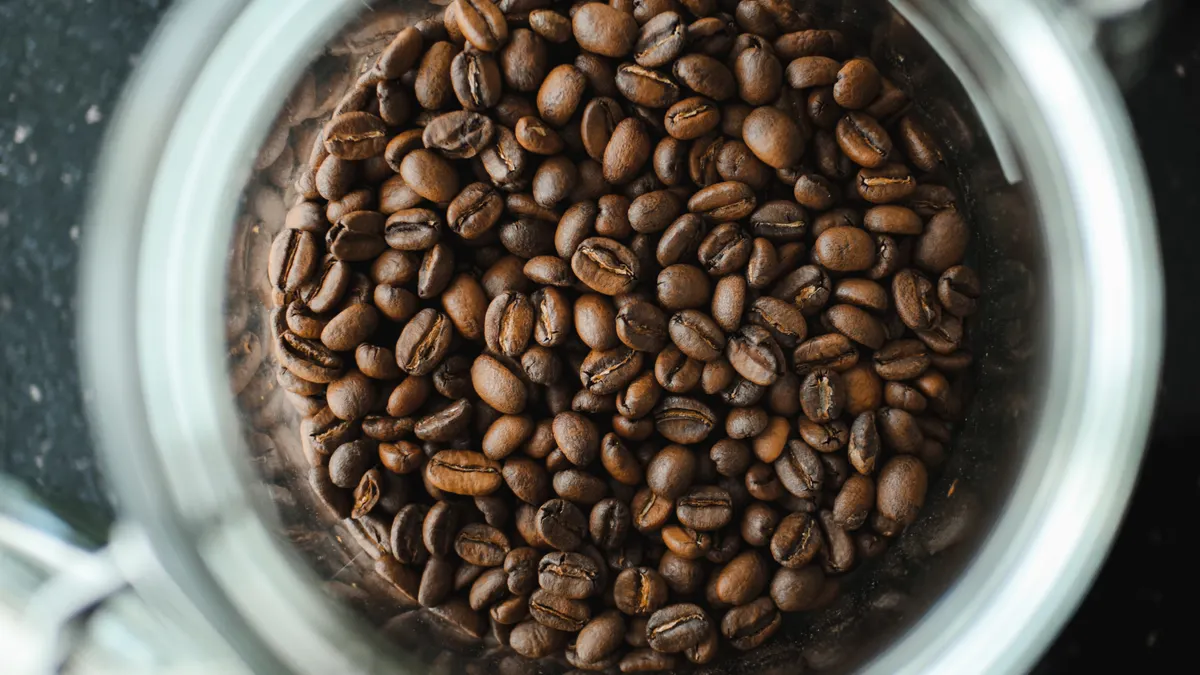
Compras una bolsa de café bueno, la abres el lunes y el viernes ya no huele igual. No es tu imaginación ni culpa del tostador: casi siempre es cómo y dónde lo guardas. En Houston eso pesa más que en otros lugares, porque aquí el aire trabaja en contra del café casi todo el año.
La buena noticia es que guardar bien el café no requiere aparatos caros. Requiere entender qué lo daña y tomar tres o cuatro decisiones sencillas.
Los cuatro enemigos del café
El café tostado se deteriora por cuatro cosas: aire, humedad, calor y luz. El oxígeno oxida los aceites y aromas; la humedad y el calor aceleran ese proceso; la luz directa también lo empeora. Todo lo demás (frascos, válvulas, congelador) son formas de mantener esos cuatro lejos del grano.
Lo que la humedad de Houston le hace a tu café
La humedad relativa promedio en Houston ronda el 75 %, y en las madrugadas suele pasar del 90 %. El café tostado es higroscópico: absorbe humedad del ambiente, y con ella también olores. Cada vez que abres la bolsa en una cocina húmeda, le das una dosis de aire húmedo que luego queda encerrada con el grano.
No vas a ver moho en una semana, pero sí vas a notar que el café pierde aroma más rápido, que sabe más plano y, si haces espresso, que se comporta distinto de un día para otro. Por eso aquí conviene ser más estricto que lo que dicen las guías genéricas.
Dónde sí y dónde no
- Sí: la bolsa original, si tiene válvula y cierre. Las bolsas de café de especialidad suelen traer una válvula de una vía que deja salir el CO₂ sin dejar entrar oxígeno. Si además tiene zíper, sácale el aire, ciérrala bien y listo.
- Sí: un envase hermético y opaco. Si la bolsa no cierra, pasa el café a un recipiente que selle de verdad y que no deje pasar la luz. Un frasco de vidrio transparente solo funciona si vive dentro de una alacena oscura.
- Sí: una alacena fresca. Lejos de la estufa, del horno, del lavaplatos y de la ventana que recibe el sol de la tarde.
- No: encima de la cafetera o junto al horno. Es el lugar más cómodo y uno de los más calientes de la cocina.
- No: la nevera. Hay condensación cada vez que la abres y el café termina oliendo a lo que tengas guardado al lado.
- No: el carro. Si compras café y sigues haciendo diligencias, no lo dejes una hora en el carro al sol. En Houston eso es un horno.
El congelador: sí, pero con reglas
Congelar café no es un mito ni un sacrilegio. Si compraste más de lo que vas a tomar en dos o tres semanas, el congelador es la mejor forma de pausar el reloj. Pero solo funciona si evitas la condensación, que es justamente lo que más daño le hace al café en un clima como el nuestro.
- Divide en porciones de lo que usas en unos días, en bolsas o envases bien sellados, con el menor aire posible.
- Saca solo una porción a la vez y déjala llegar a temperatura ambiente cerrada antes de abrirla. Si la abres fría, el aire húmedo de la cocina se condensa sobre el grano.
- No lo vuelvas a congelar. Lo que salió, se usa.
Un dato curioso: un estudio de la Universidad de Bath publicado en Scientific Reports en 2016 encontró que los granos más fríos se muelen de forma más uniforme. No significa que tengas que moler congelado, pero sí confirma que el frío en sí no es el enemigo. El enemigo es la humedad.
Fresco no es lo mismo que recién tostado
Aquí hay una trampa. El café recién salido del tostador está lleno de CO₂, y ese gas estorba la extracción: el agua no moja el café de forma pareja. Por eso conviene dejarlo reposar unos días. Como referencia, para métodos de filtrado suelen bastar entre tres y diez días desde el tueste; para espresso, en tuestes claros y medios, muchas veces mejora a partir de la primera o segunda semana.
Después de ese reposo viene la mejor ventana, que para café en grano suele ser de unas dos a cuatro semanas desde la fecha de tueste. Por eso:
- Fíjate en la fecha de tueste, no en la de vencimiento.
- Compra lo que vas a usar en una o dos semanas.
- Muele justo antes de preparar. El café molido pierde aroma muchísimo más rápido que el grano entero, y en una cocina húmeda todavía más.
Cómo se nota en la taza
Si haces filtrado, el café viejo se nota en una taza plana, sin aroma, con un amargor sin gracia. Si haces espresso, se nota antes y más fuerte. Un café demasiado fresco hace burbujas, fluye disparejo y puede saber agrio y amargo a la vez. Uno pasado da una crema pálida y delgada, corre muy rápido y sabe hueco.
En los dos casos, lo que la mayoría hace es tocar la molienda sin entender por qué el café cambió. Y es normal: la misma bolsa no se comporta igual en el día 5 que en el día 25. Saber leer eso es la diferencia entre pelear con tu máquina y ajustarla con criterio.
"Guardar bien el café no lo mejora. Solo evita que pierdas lo que ya pagaste."
You buy a bag of good coffee, open it on Monday, and by Friday it doesn't smell the same. It's not your imagination and it's usually not the roaster's fault. Most of the time it comes down to how and where the beans are stored. In Houston that matters more than in most places, because the air here works against coffee for most of the year.
The good news: storing coffee well doesn't take expensive gear. It takes knowing what damages it and making three or four simple choices.
Coffee's four enemies
Roasted coffee breaks down because of four things: air, moisture, heat and light. Oxygen degrades the oils and aromatics; moisture and heat speed that up; direct light makes it worse. Every storage trick you've heard of (jars, valves, the freezer) is just a way of keeping those four away from the beans.
What Houston humidity does to your beans
Houston's average relative humidity sits around 75%, and early mornings routinely top 90%. Roasted coffee is hygroscopic: it pulls moisture out of the air, and odors along with it. Every time you open the bag in a muggy kitchen, you let in a dose of damp air that then stays sealed in with the beans.
You won't see mold in a week. What you will notice is aroma fading faster, a flatter cup and, if you pull espresso, shots that behave differently from one day to the next. So it pays to be a bit stricter here than generic storage guides suggest.
Where to keep it, and where not to
- Yes: the original bag, if it has a valve and a zipper. Specialty coffee bags usually have a one-way valve that lets CO₂ out without letting oxygen in. Press the air out, seal it, done.
- Yes: an airtight, opaque canister. If the bag doesn't reseal, move the beans to something that truly seals and blocks light. A clear glass jar only works if it lives in a dark cabinet.
- Yes: a cool pantry or cabinet. Away from the stove, the oven, the dishwasher and the window that gets afternoon sun.
- No: on top of the coffee maker or next to the oven. Convenient, and one of the warmest spots in the kitchen.
- No: the fridge. You get condensation every time you open the door, and the coffee picks up whatever is stored next to it.
- No: the car. If you buy coffee and keep running errands, don't leave it in a parked car in the sun. In Houston that's an oven.
The freezer: yes, with rules
Freezing coffee isn't a myth or a crime. If you bought more than you'll drink in two or three weeks, the freezer is the best way to pause the clock. It only works if you avoid condensation, which happens to be the biggest threat to coffee in a climate like ours.
- Split it into portions of a few days' worth, in well-sealed bags or containers with as little air as possible.
- Take out one portion at a time and let it reach room temperature still sealed before opening. Open it cold and the humid kitchen air condenses right onto the beans.
- Don't refreeze. Once it's out, use it.
A fun fact: a 2016 University of Bath study published in Scientific Reports found that colder beans grind more evenly. That doesn't mean you need to grind frozen, but it does show that cold itself isn't the enemy. Moisture is.
Fresh doesn't mean just roasted
Here's the catch. Coffee straight out of the roaster is full of CO₂, and that gas gets in the way of extraction: water can't wet the grounds evenly. That's why beans benefit from a few days of rest. As a rough guide, filter brewing is usually happy somewhere between three and ten days off roast; for espresso, light and medium roasts often improve after the first or second week.
After that rest comes the sweet spot, which for whole beans is generally about two to four weeks from the roast date. So:
- Look for the roast date, not the best-by date.
- Buy what you'll use in one or two weeks.
- Grind right before brewing. Ground coffee loses aroma far faster than whole beans, and faster still in a humid kitchen.
How it shows up in the cup
With filter coffee, stale beans give you a flat, aromaless cup with a dull bitterness. With espresso it shows up sooner and louder. Coffee that's too fresh foams, flows unevenly and can taste sour and bitter at the same time. Coffee that's past its best gives thin, pale crema, runs fast and tastes hollow.
Either way, most people start fiddling with the grinder without knowing why the coffee changed. That's normal: the same bag doesn't behave the same on day 5 as on day 25. Learning to read that is the difference between fighting your machine and adjusting it on purpose.
"Storing coffee well doesn't make it better. It just stops you from losing what you already paid for."